November 24, 2026
What registration details should you double-check before ordering plates?
By @drivewaydetails
When you order a set of plates for your vehicle, the checkout page is where small mistakes become expensive delays. A single wrong character, a spacing error, or a mismatched postcode can mean the plates arrive unusable or fail to meet legal standards. Knowing exactly what to verify before you pay saves time, frustration, and the cost of a reorder.
Start with the registration mark itself. This is the core of the order, and it must match the vehicle's V5C logbook exactly. Check every letter and number, paying close attention to characters that look alike: O and 0, I and 1, S and 5. The spacing of the characters also matters. For UK plates, the format follows a strict pattern. A standard modern registration mark like AB51 ABC has groups that must be spaced correctly. The DVLA sets rules for how far apart each character and group can be, and getting this wrong can make the plates illegal to display on the road. Even if the design preview on screen looks right, compare the spacing to the logbook entry or a current plate on the vehicle.
Plate dimensions and style choices
The physical size of the plate is another detail that is easy to overlook. Most cars use a standard rectangular plate, but some vehicles need a square or shorter plate to fit the mounting area. The checkout should let you select the correct dimensions for your vehicle. If you are unsure, measure the existing plate or the recess where it sits. A plate that is too large will not fit, and one that is too small may look odd and could fail to meet the minimum size requirements set by the regulations.
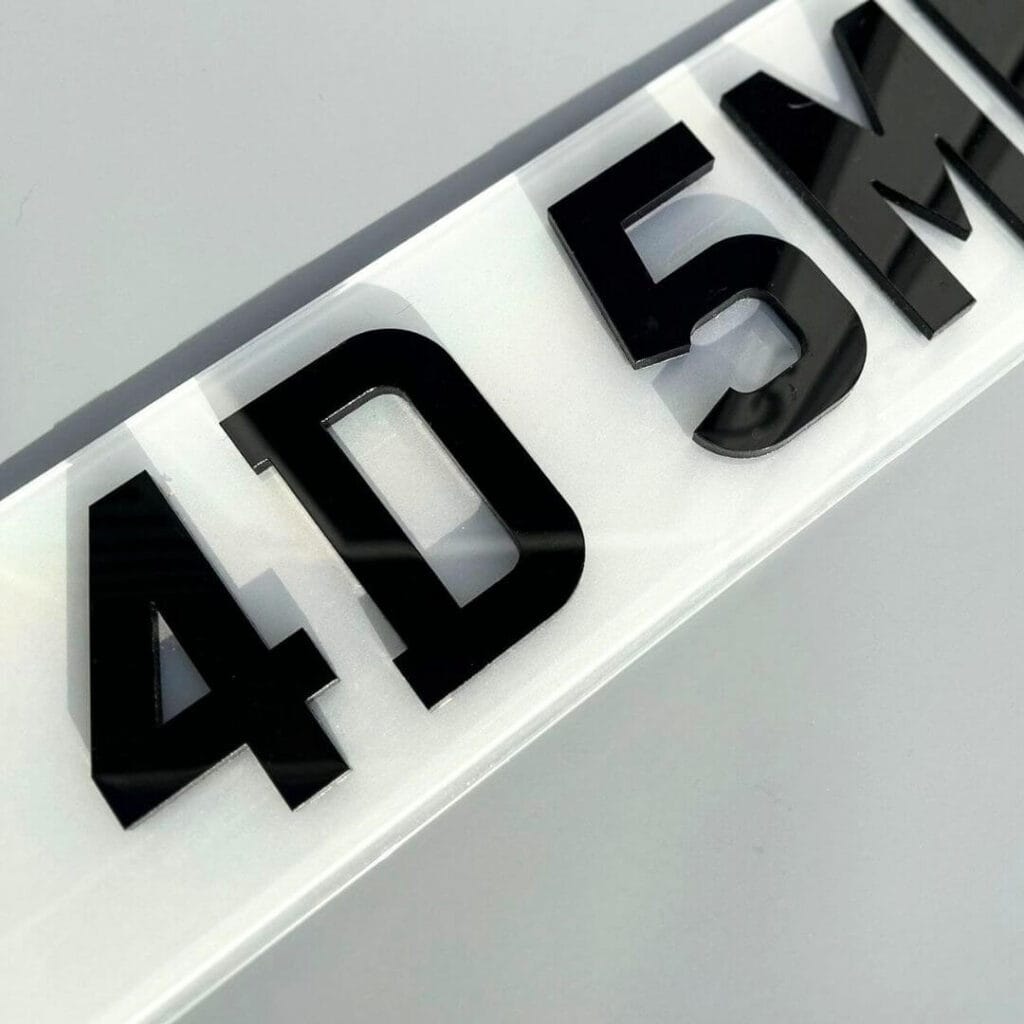
Style options include the material, finish, and whether you want a front plate only, a rear plate only, or a pair. Common choices are acrylic plates with reflective backing, which are the standard for road use, and 4D gel or raised characters for a more modern look. Each style has its own legal requirements. For example, reflective plates must meet British Standard BS AU 145e, and any decorative elements must not reduce legibility. At checkout, confirm that the style you have selected is compatible with the vehicle type and that the supplier offers plates that are DVLA-compliant. Some custom finishes are not legal for road use, so if you are ordering for a road vehicle, stick to options that explicitly state they meet the relevant standard.

Delivery address and contact details
A simple typo in the delivery address can send your plates to the wrong house. Double-check the postcode, house number, and street name. If the shipping address differs from the billing address, make sure both are correct. Some suppliers require the delivery address to match the registered keeper's address on the V5C, especially for replacement plates that need proof of ownership. If you are ordering for a vehicle that is not registered to you, you may need to upload extra documents. The checkout page should indicate what proof is needed. Having these documents ready before you start the order speeds up the process.
Your phone number and email address are also important. If the supplier needs to clarify something about the order, they will contact you through these. A wrong email can mean you miss the dispatch notification or a request for additional information. Check that the email address is typed correctly, especially if you are entering it manually rather than relying on autofill.
Fixing holes and fitting details
Not all plates come with pre-drilled holes. Some vehicles have raised mounting points that require holes in specific positions, while others use adhesive pads or a frame. At checkout, look for an option to specify whether you need holes drilled and, if so, the spacing between them. Common measurements are a 200mm or 300mm hole centre distance, but some cars use different spacing. If you choose to drill holes yourself, you can mark the positions after the plate arrives, but having them pre-drilled saves time and ensures alignment. If you are not sure, select the option for no holes and use adhesive pads or a universal fitting kit instead.
Proof of ownership and registration documents
Many reputable suppliers require you to upload or enter details from your V5C logbook to prove you are the registered keeper. This is a legal requirement for replacement plates in the UK. At checkout, you may be asked for the document reference number from the logbook, the vehicle registration mark, and your name and address as they appear on the document. Have the logbook handy before you start. If the vehicle is leased or a company car, you may need a letter of authorisation from the registered keeper. Check the supplier's policy on this before completing the order to avoid a delay.
The checkout process should also confirm that you are ordering plates for a vehicle that is taxed and has a valid MOT if required. Some suppliers verify this automatically through the DVLA database. If your vehicle is off the road and has a Statutory Off Road Notification (SORN), you can still order plates, but you must declare that the plates will not be used on a public road until the vehicle is taxed and MOT'd again.
Design preview and final visual check
Before you click the final button, review the design preview carefully. This is the last chance to see how the plate will look. Check the font style, character spacing, and any optional elements like a border, flag, or badge. The preview should match the legal requirements: characters in the correct font, no italic or stylised lettering that could be misread, and the correct size relative to the plate background. If the preview shows a slogan or graphic that is not standard, verify that it is allowed for road use. Some decorative plates are intended for show use only and cannot be displayed on a public road.
One more thing: make sure the number of plates in the order is correct. If you need a pair, confirm that the quantity is set to two. Some suppliers default to a single plate, and adding a second one is an extra step. A missing rear plate means you cannot drive the vehicle legally until you get a replacement.
Why these details matter for replacement plates
Getting the details right at checkout is not just about convenience. A plate with a wrong registration mark or incorrect spacing is illegal to display. You could face a fine, and the vehicle may fail an MOT inspection. Even a minor error like a missing fixing hole can make fitting the plate harder, leading to a poor installation that might not stay secure. Taking an extra two minutes to review every field saves you from having to order a second set and wait for delivery again.
When you are ready to order replacement plates, the process should be straightforward. Many people choose to Order Number plates Online because it allows them to compare styles, preview the design, and complete the purchase from home. The key is to treat the checkout page as a final checklist. Read each section, compare it to your logbook, and confirm that the delivery details are accurate. A careful approach means the plates arrive on time, fit correctly, and are fully legal to use on the road.
For most drivers, the checkout process takes only a few minutes. But those minutes are where small errors happen. By focusing on the registration mark, plate dimensions, delivery address, and proof of ownership, you can avoid the most common pitfalls. If you need to Order Number plates Online, take the same care you would with any important purchase. Double-check the details, review the preview, and you will have a set of plates that are ready to fit the moment they arrive.
❧